

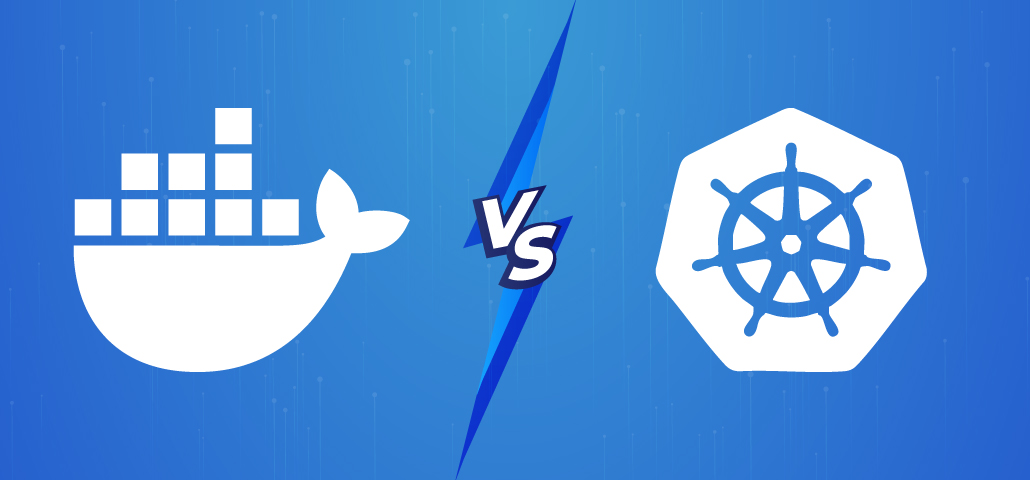
Docker or Kubernetes? A Guide to Choosing the Right Containerization Tool
 Hiral Patel


Summarise with AI:



As companies grow, they often face challenges in managing, deploying, and scaling their applications across different environments.
Containerization has become a vital technology in overcoming these challenges by allowing businesses to package applications and their dependencies into isolated environments, ensuring consistency and flexibility in deployment.
Two players in the containerization market are Docker and Kubernetes. Each offers unique advantages, but the decision between the two depends on your company’s needs. This blog explores the differences, benefits, and use cases for Docker and Kubernetes, helping you make an informed choice for your business.
Kubernetes or Docker consultants can play a significant role in successful implementation of these tools.
The Challenge of Choosing the Right Containerization Tool
With the growing complexity of software environments, businesses are faced with a crucial decision: how to efficiently manage, deploy, and scale their applications. Docker and Kubernetes have emerged as popular tools to solve these problems, but they each serve different needs.
Some common concerns business leaders face when deciding on a containerization tool are:
- Operational Complexity How do you ensure your deployment pipeline is optimized?
- Scalability As your business grows, will your chosen platform scale efficiently?
- Resource Management Are you fully utilizing your infrastructure to minimize costs?
- Ease of Adoption Will your team be able to learn and adopt the tool quickly?
Choosing the wrong platform can lead to mismanagement, wasted resources, and unnecessary complexity, ultimately hurting your business growth.
The Risks of Making the Wrong Choice
Selecting the wrong containerization tool can have far-reaching consequences. Here are a few ways this choice can negatively impact your business:
- Increased Operational Costs Managing containers manually or without orchestration can be time-consuming and prone to errors which can lead to overspending on infrastructure.
- Downtime and Inefficiency Some containerization tools lack the ability to scale automatically, leading to downtime and inefficient resource use which will slow your time-to-market and reduce productivity.
- Team Frustration Adopting a platform that your team struggles to learn can slow down your entire workflow leading to delays in application deployment.
- Lack of Flexibility Choosing a solution that cannot grow with your business will result in bottlenecks, hindering innovation and progress.
Without addressing these challenges, your company risks missing out on opportunities for scaling and growth.
Docker vs Kubernetes – A Detailed Comparison
Let’s dive into the specifics of each tool to help you understand which one is better suited for your organization’s needs.
What is Docker?
A Simplified Containerization
Docker is a leading commercial platform designed to simplify how developers build, deploy, and manage containerized applications. With its client-server architecture, Docker streamlines complex processes through an intuitive set of commands and a unified API, making it a go-to solution for businesses aiming to modernize their software development workflows.
One of Docker’s key strengths lies in its ability to package applications into immutable container images using a Dockerfile. This ensures that your software is portable, secure, and consistent across multiple environments.
While containers can be created without Docker, the platform's comprehensive toolkit significantly reduces time and effort, allowing your development team to focus on innovation.
Docker container images are fully compatible with various orchestration platforms such as Kubernetes, Docker Swarm, Apache Mesos, and HashiCorp Nomad, making it easy to scale and deploy across any infrastructure.
However, managing containers at scale poses unique challenges.
Orchestrating workloads across multiple servers, ensuring zero-downtime deployments, and monitoring application health are critical for maintaining smooth operations, especially for businesses dealing with large-scale infrastructure.
To overcome these complexities, container orchestration tools like Kubernetes, Docker Swarm, and HashiCorp Nomad have become essential.
These platforms empower organizations to effectively manage containerized applications, optimize resource allocation, ensure security, and support multi-platform deployments, making Docker an indispensable part of a scalable, modern infrastructure strategy.
Key Benefits of Docker
Here are a few key benefits of docker. Let's explore
- Simplicity Docker is easy to install, configure, and use. It abstracts many complexities, allowing developers to get started quickly.
- Lightweight Docker containers are much more lightweight than traditional virtual machines. This means faster startup times and more efficient use of system resources.
- Portable Containers built with Docker can be run anywhere—on-premises, in the cloud, or in hybrid environments—without modifications.
- Fast Development Cycles Docker allows for rapid prototyping, testing, and deployment, which helps businesses bring products to market faster.
Use Cases for Docker
Let's look at a few use cases of Docker.
- Startups and SMEs If your company is just getting started with containerization and doesn’t have extensive infrastructure requirements, Docker provides a quick and easy solution.
- Development and Testing Environments Docker’s ability to replicate environments makes it a great choice for testing and quality assurance before deployment.
- Single-host Deployments If you’re running your application on a single server, Docker provides a straightforward way to manage them.
Limitations of Docker
- Limited Orchestration Docker itself doesn’t offer advanced features like auto-scaling, load balancing, or self-healing. While Docker Swarm provides some basic orchestration features, it’s not as powerful as Kubernetes.
- Scaling Docker is more suited to smaller-scale applications. As your business grows and needs to manage many containers, scaling can become challenging.
What is Kubernetes?
Advanced Orchestration and Scaling
Kubernetes, often referred to as K8s, is a leading open-source platform for automating the deployment, scaling, and management of containerized applications across a cluster of networked resources. While it can be used alongside Docker, Kubernetes operates independently, offering flexibility in container orchestration.
Originally developed by Google to handle the challenge of running billions of containers on a scale, Kubernetes was open-sourced in 2014 and quickly became the industry-standard tool for container orchestration. Its primary goal is to simplify the deployment and management of complex distributed systems, enabling businesses to maximize resource efficiency while leveraging the benefits of containers.
A Kubernetes deployment strategy optimizes resource usage by grouping containers to run on the same machine, reducing network overhead. A typical example might include bundling an application server, a Redis cache, and a SQL database into a single group. Docker, by contrast, operates with one process per container, highlighting the operational advantages Kubernetes brings to distributed environments.
For DevOps teams, Kubernetes is an invaluable tool. It provides key features like service discovery, in-cluster load balancing, automated rollouts and rollbacks, self-healing capabilities for failed containers, and comprehensive configuration management. These features make Kubernetes essential for building resilient DevOps CI/CD pipelines and improving the overall DevOps workflow.
However, Kubernetes is not a full-fledged Platform-as-a-Service (PaaS) and managing its infrastructure can be complex. This is why many businesses opt for managed Kubernetes services from cloud providers, helping them overcome the challenges of cluster management while still benefiting from the scalability and efficiency Kubernetes offers.
Key Benefits of Kubernetes
Let's discuss the critical benefits of Kubernetes.
- Automatic Scaling Kubernetes automatically scales your containers up or down based on real-time demand, ensuring that you’re always using your resources efficiently.
- Orchestration and Automation Kubernetes can handle complex tasks like container orchestration, load balancing, and service discovery, freeing your team from manual management.
- Self-Healing Kubernetes can detect if a container fails and automatically restarts it, ensuring minimal downtime and higher availability.
- Multi-cloud Flexibility Kubernetes allows you to run your applications across multiple cloud providers or on-premises infrastructure, giving your business more flexibility and avoiding vendor lock-in.
Use Cases for Kubernetes
- Large Enterprises If you’re managing large-scale applications with multiple microservices, Kubernetes offers the orchestration and automation you need.
- Complex, Multi-host Deployments Kubernetes is designed to manage hundreds or even thousands of containers across multiple servers or cloud environments.
- High-availability and Auto-scaling Applications For applications that experience variable traffic, Kubernetes ensures you always have the right number of resources deployed.
Limitations of Kubernetes
- Complexity Kubernetes has a steeper learning curve than Docker, requiring more time and expertise to implement and manage effectively.
- Resource Overhead For small businesses or applications, Kubernetes might introduce unnecessary complexity and operational overhead.
Which Tool Should Your Business Choose?
The answer depends on the specific needs and scale of your business:
Choose Docker If
- You are a startup or a small-to-medium-sized business.
- You need a simple, lightweight containerization solution that’s easy to manage.
- You’re mainly working with single applications or isolated environments.
Choose Kubernetes If
- You manage complex applications or microservices across multiple environments.
- You require orchestration, auto scaling, and self-healing features.
- Your business is large and needs a scalable, robust solution for container management.
Key Takeaways
- Docker is an excellent solution for businesses looking for simplicity, ease of use, and quick deployment of smaller applications.
- Kubernetes offers advanced orchestration, scaling, and self-healing capabilities, making it the go-to platform for managing complex, multi-service applications.
Optimize Your Container Strategy
Choosing the right containerization provider can significantly impact your business’s operational efficiency and scalability. While Docker may be perfect for smaller, simpler applications, Kubernetes is designed for larger enterprises with more complex needs. If you have complex enterprise-scale applications and you are worried about costs, then Kubernetes is an ideal container orchestration choice for you due to its cost optimization abilities.
At Prioxis, we specialize in helping businesses like yours leverage the power of containerization. Whether you’re considering Docker for rapid deployment or Kubernetes for scaling complex applications, our team can guide you through the process, ensuring that your infrastructure is set up for success.
Get in touch today to learn how we can help you optimize your containerization strategy, from initial deployment to ongoing management.
Build a Scalable Future with the Right Containerization Tool
Both Docker and Kubernetes offer powerful features for businesses looking to improve their development and deployment workflows. While Docker shines in simplicity and speed, Kubernetes is built for enterprises that require sophisticated orchestration and scalability.
Choosing the right tool depends on your business size, application complexity, and long-term goals. Whatever your containerization needs, Prioxis ,a leading DevOps consulting firm is here to assist you with expert guidance, implementation, and ongoing support. Contact us today to explore how application containerization can transform your business operations.