

Summarise with AI:



Salesforce is a market-leading customer relationship management system with innovation intertwining it to the DNA, and in an ever-evolving world of business operation and connectivity, this runs as a smart and convenient bus to explore and reach your destinations of success (and beyond). Salesforce, founded in 1999, has grown from a CRM pioneer to a cloud-based platform that touches on all aspects of business operation and customer engagement.
Salesforce Development is an essential part of this ecosystem that allows businesses to customize the platform as per their requirements. In this blog, learn about importance and benefits of the Salesforce development, giving an idea on why it is important for enterprises today.
History of Salesforce
Salesforce was founded by Marc Benioff and Parker Harris in 1999, marking the beginning of a new era in customer relationship management. The platform was designed as a cloud-based solution, offering businesses the flexibility to manage client interactions without the constraints of traditional, on-premises software. Salesforce's introduction of the Software-as-a-Service (SaaS) model revolutionized the industry, providing scalable, accessible solutions for businesses of all sizes.
Over the years, Salesforce expanded its offerings beyond CRM to include Sales Cloud, Service Cloud, Marketing Cloud, and more, creating a robust multi-cloud ecosystem. The company's commitment to innovation and customer success has cemented its position as a leader in the industry.
What is Salesforce Development?
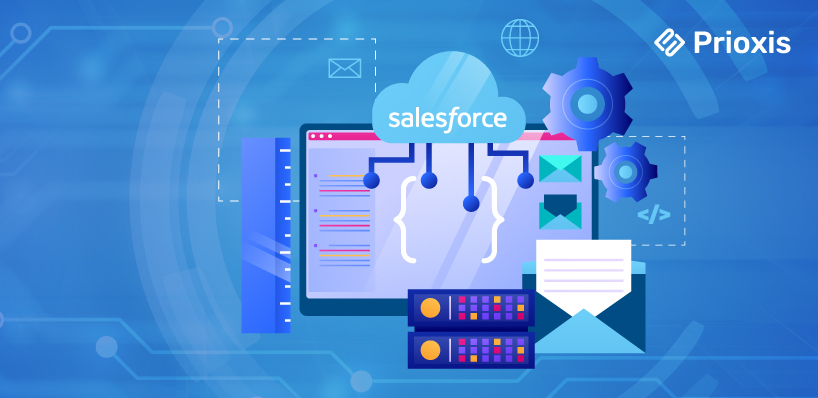
Salesforce development involves customizing and extending the Salesforce platform to meet specific business requirements. This process includes creating new applications, enhancing existing functionalities, and integrating Salesforce with other systems. Salesforce development ensures that the platform is not just a tool, but a strategic asset tailored to the unique needs of each organization.
Developers use a variety of tools and technologies, such as Apex (Salesforce's proprietary programming language), Visualforce, and Lightning components, to build customized solutions. This development process enables businesses to automate workflows, improve efficiency, and gain deeper insights from their data.
Importance Of Salesforce Development
In today's competitive business environment, customer expectations are constantly evolving. Here are six reasons why Salesforce development is essential:
1. Customization Power
Salesforce development allows businesses to customize their CRM solutions to fit their unique processes and workflows. This ensures that the platform aligns perfectly with business needs.
2. Scalability
As businesses grow, their CRM needs evolve. Salesforce development ensures that the platform can scale with the organization, accommodating increased data and user demands.
3. User-Centric Design
Customized interfaces and functionalities enhance the user experience, leading to higher adoption rates and improved productivity.
4. Integration Capabilities
Salesforce facilitates seamless integration with other business systems, ensuring a cohesive flow of data across the organization.
5. Automation and Workflow Optimization
Salesforce enables the automation of routine tasks and the optimization of workflows. This not only reduces manual effort but also minimizes errors, improving overall efficiency.
6. Compliance and Security
Salesforce allows businesses to implement robust security measures and ensures compliance with industry-specific regulations, which is critical in sectors like healthcare and finance.
Benefits of Salesforce Development Services
Salesforce offers numerous advantages that transform CRM from a basic tool into a powerful business driver:
- Tailored Solutions Custom development ensures that applications and workflows are designed to meet specific business needs, providing a perfect fit for unique processes.
- Efficiency Unleashed By automating repetitive tasks and streamlining workflows, Salesforce development frees up valuable time for employees to focus on strategic activities.
- Dynamic User Experiences Custom interfaces and functionalities create an engaging user experience, boosting satisfaction and productivity.
- Real-Time Decision Orchestration Advanced reporting and analytics tools provide real-time insights, enabling data-driven decision-making and strategic planning.
- Agility in the Face of Change Salesforce development ensures that the CRM system can adapt to changing business needs and industry trends, maintaining agility and competitiveness.
- Integration Harmony Seamless integration with other systems creates a unified business ecosystem, facilitating efficient data flow and collaboration.
- Cost-Efficiency Automation and optimization lead to cost savings by reducing manual efforts and minimizing errors.
- Competitive Edge Customization and innovation provide a competitive advantage, enabling businesses to respond swiftly to market demands and stay ahead of the competition.
Challenges
Despite its benefits, Salesforce development comes with its own set of challenges:
- Complexity of the Platform The extensive features and tools available in require salesforce developers to have in-depth knowledge and expertise to fully leverage the platform.
- Apex Code Complexity Writing efficient and scalable code in Apex demands a thorough understanding of the language and the Salesforce data model.
- Governor Limits Salesforce imposes governor limits to ensure fair resource usage, which can be challenging for developers to navigate while building robust solutions.
- Data Security Challenges Ensuring data security and compliance with regulations requires careful planning and implementation of access controls and permissions.
- Integration Hurdles Integrating Salesforce with external systems involves handling data synchronization and ensuring seamless communication, which can be technically complex.
- User Adoption Resistance Effective communication and training are essential to overcome resistance from users and ensure smooth transitions to new solutions.
- Continuous Updates and Releases Staying updated with Salesforce's regular releases and ensuring compatibility with new features can be challenging.
- Balancing Customization and Out-of-the-Box Features Striking the right balance between customization and leveraging standard features requires strategic decision-making to avoid unnecessary complexity.
Salesforce Use Cases
Salesforce development proves beneficial across various industries:
Healthcare
Challenges: Fragmented patient data, inefficient communication.
Solutions: Centralized patient data management, integration with communication tools.
Benefits: Enhanced patient care, improved collaboration.
Financial Services
Challenges: Manual account management, ineffective customer engagement.
Solutions: Workflow automation, personalized interactions.
Benefits: Streamlined processes, enhanced customer experiences.
Nonprofit Organizations
Challenges: Limited donor visibility, inefficient fundraising.
Solutions: Custom donor management streamlined fundraising operations.
Benefits: Improved donor engagement increased operational efficiency.
Education
Challenges: Disjointed student information, limited communication.
Solutions: Centralized student data, effective outreach.
Benefits: Enhanced Student Management, Improved Engagement
Who Is a Salesforce Developer?
A Salesforce developer specializes in designing, customizing, and implementing solutions on the Salesforce platform. They use technologies like Apex and Visualforce to create robust applications that meet specific business needs. Salesforce developers are responsible for:
- Customization: Tailoring applications and workflows to fit business requirements.
- Coding: Writing and maintaining code using Salesforce technologies.
- Integration: Ensuring seamless data flow between Salesforce and other systems.
- Data Modeling: Designing efficient data structures.
- Problem Solving: Diagnosing and resolving technical issues.
- Continuous Learning: Staying updated with Salesforce features and best practices.
Why Do You Need Salesforce Developers for Your Business?
Having dedicated Salesforce developers is crucial for maximizing the platform's potential:
- Expertise in the Salesforce Ecosystem: Developers possess in-depth knowledge of Salesforce tools and features.
- Customization and Configuration: They can tailor the platform to meet unique business needs.
- Problem Solving and Troubleshooting: Developers efficiently resolve technical issues.
- Continuous Improvement: They ensure the platform evolves with new features and updates.
- Integration: Developers integrate Salesforce with other systems for seamless data flow.
- Adaptability to Change: They ensure the CRM remains agile and responsive to business changes.
Benefits of Hiring a Salesforce Development Company
1. Increased Efficiency
By hiring a Salesforce development company, you can streamline your workflows and automate repetitive tasks. This leads to more efficient operations, allowing your team to focus on high-impact activities.
2. Optimized Customer Engagement
A Salesforce development company can help you create personalized interactions and improve communication with your customers. This enhances their overall experience, leading to increased satisfaction and loyalty.
3. Data-Driven Decision Making
With real-time insights and business intelligence provided by a Salesforce development company, you can make informed decisions quickly. This ensures your strategies are always backed by accurate data.
4. Adaptability to Industry Changes
A Salesforce development company stays updated with the latest features and best practices. This means your business can swiftly adapt to industry changes, keeping you ahead of the curve.
5. Cost Savings
A Salesforce development company can help you in reducing Salesforce implementation cost by offering a cost-effective solution & reducing manual efforts. This maximizes your ROI while ensuring efficient management of your Salesforce platform.
6. Competitive Edge
Custom solutions and innovative approaches from a Salesforce development company give your business a competitive advantage. This helps you stand out in the market and meet unique business needs.
7. Effective Collaboration
They create a unified digital workspace with seamless data flow, improving collaboration across your teams. This fosters a more cohesive and productive work environment.
8. Scalability
A Salesforce development company supports your business growth with scalable solutions. As your needs evolve, they ensure your Salesforce platform evolves too, allowing for seamless expansion.
Skills Required to Be a Successful Salesforce Developer
- Apex Programming
- Visualforce and Lightning Components
- Data Modeling and Management
- Integration Skills
- Problem-Solving
- Soft Skills
- Programming Languages
Conclusion
Salesforce development is a fundamental aspect that not only makes your CRM from being just another tool, but also a strategic asset. Salesforce has come a long way from being born as a cloud first company and establishing itself as one of the biggest clouds in the IT sky; leading CRM innovation all along its journey. Thus, having Salesforce consulting services can help build and tailor CRM for businesses. This allows them to scale and improve their strategies by which they use CRM, increasing their performance by engaging with customers better and securing competitive advantage.
A proficient Salesforce developer is usually an IT professional on the go and evolves as a vital collaborative IT partner in crafting the digital structure of a business to continuously be adaptive, productive and technologically burgeon. In an era when customer interactions have become so complicated, the value of Salesforce development strides well above all other considerations that determines business success and growth.