


Summarise with AI:



ChatGPT is claimed to be a revolutionary innovation in recent times and credited with having rewritten the rules of human-machine interaction. It pushed AI into the mainstream. And since its launch, ChatGPT still hasn't left the spotlight.
The breakthrough has now grown into a cultural phenomenon, unleashing a torrent of AI agents, chatbots, co-pilots, and assistants, and new categories of software such as answer engines - Perplexity- and making AI a gravitational force around which the modern tech world revolves. Today, nearly every form of digital solutions and services is being created and upgraded through an AI-first lens. Tools for writing, coding, designing, and productivity in the B2B/B2C domain are being reimagined with AI in their DNA.
AI is dramatically changing the world around us more than most of us realize. See the numbers: in less than four years since ChatGPT’s launch in late 2022, ChatGPT has now 1 billion weekly active users, and Perplexity has 100 million monthly active users worldwide.
ChatGPT and Perplexity are not close competitors. They belong to different leagues: the former is a chatbot, and the latter is an answer engine - an evolved version of a search engine. They are compared because they overlap in how people search, research, learn, and find information.
This is what we are going to cover in this ChatGPT vs Perplexity topic. We will weigh the two against each other, get into similarities and differences, explore some uses to find when one is better than the other, and some lesser-known aspects of both you should know.
While both can perform similar tasks, the experience and outcomes can be very different depending on what you're trying to achieve.
Perplexity vs ChatGPT
| Parameter | Perplexity | ChatGPT |
|---|---|---|
| Model | Multiple models like Sonar 2, ChatGPT’s GPT, Google’s Gemini, Claude’s Sonnet and Opus, Kimi’s open source K3, GLM, Grok, Nvidia’s Nemotron | Latest GPT models for reasoning and research |
| Model usage | You can select any of the models for your use cases; it automatically chooses the best if not manually chosen by the user | You can choose between the GPT models as the latest ones are rolled out |
| Answer Engine | Perplexity is an answer engine; it searches for real-time information across the web for every query, taking longer for simple queries | Web search is not enabled by default; depending on the query, it most often provides a quick and direct answer |
| Multimodal support | It generates images and allows users to upload, analyze, and generate text, visual, and audio files | Yes, it processes and understands text, visual, and audio files, with the ability to generate visuals, PDFs, etc. |
| Agentic features | Yes, Perplexity’s Comet browser can handle and automate browser-based activities | ChatGPT has a separate browser |
| Platforms | Web, mobile and desktop | Web, mobile, and desktop |
ChatGPT is an artificial intelligence chatbot
ChatGPT is a multimodal AI tool that can search the web; understand and respond in natural language; assist professionals in creative, cognitive, and analytical work or activities such as writing, coding, and designing; and analyze different forms of data such as text, audio, and visuals.
It leverages GPT (Generative pre-trained transformer) – a specialized type of deep learning model – to perform the task or work given by the user. LLMs are the brain, while a Chatbot is what we can say is generally "a wrapper around that brain". It is the world's most popular AI chatbot today.
As of writing this article, ChatGPT holds around a 53% share of worldwide generative AI web traffic. It is the market leader in this segment. It is widely used by people from all walks of life for an expanding range of tasks such as writing, coding, research, analysis, learning, creating, ideation, and brainstorming.
You can connect it further with external apps and services such as email, cloud storage, design tools, calendar, project management, business systems, developer tools, databases, web services, and APIs.
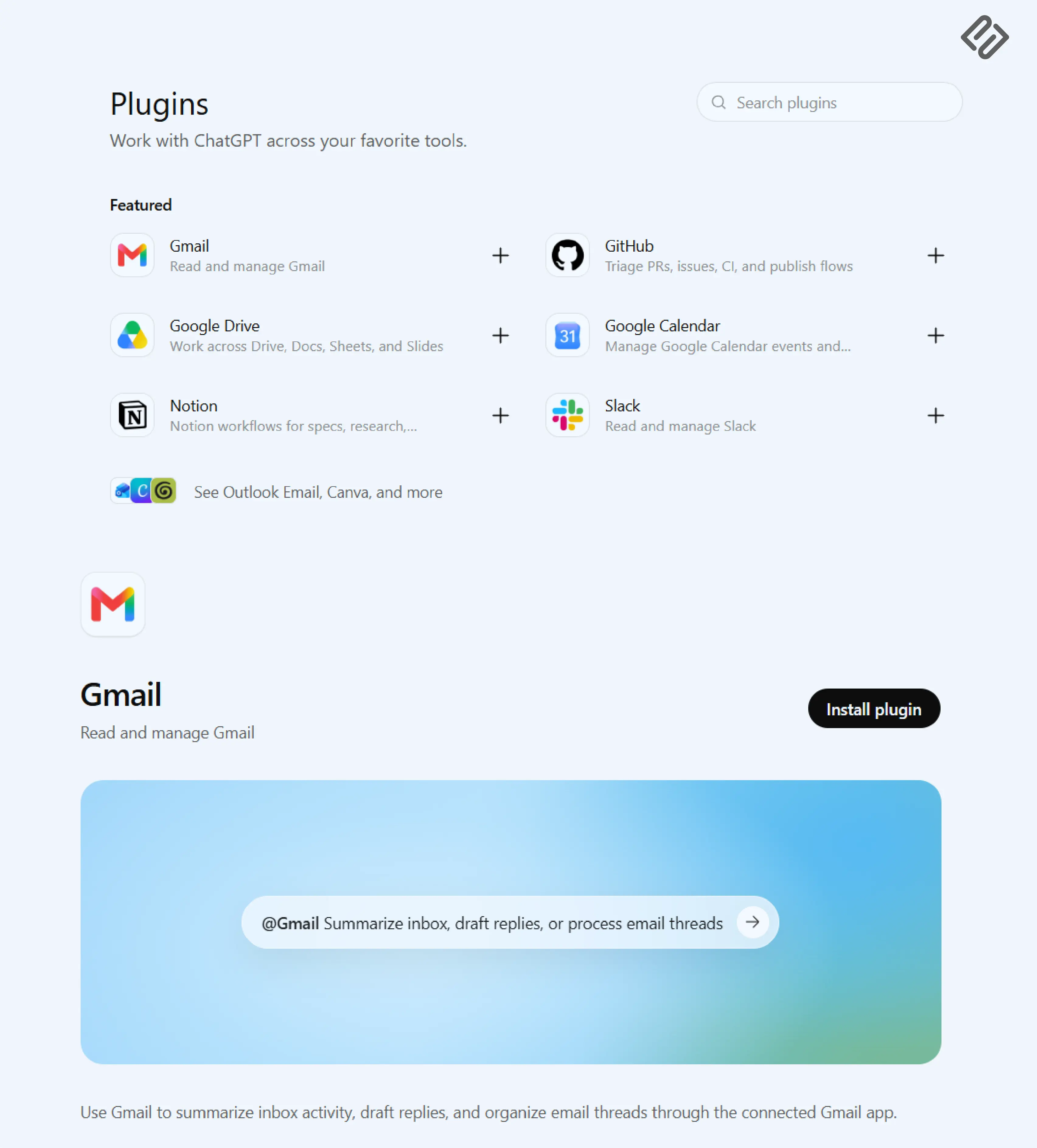
By doing so, you will be able to use it inside several popular apps like Canva, Spotify, Gmail, and Slack. For example, after connecting your Gmail, you can ask questions such as “find the latest email from my manager” or “summarize the email”. You can create visually appealing designs in Canva by writing prompts in plain English and work with your favorite tools using its Plugins feature.
There is a Deep Research feature, which employs reasoning models for multi-step execution, crawls more sources than standard search does, and simultaneously searches through the web, pdf, and other sources, and cross-references data.
Top Features:
- Features: To organize conversations, files, and context in the workspace.
- Memory: To remember details about you and from cross-conversations.
- Deep Research: Useful for research and understanding complex topics,
- Voice mode: Have a natural conversation like you are talking to another person.
- Canvas: A workspace to edit, rewrite, and improve your content
- Image generation: Create designs by prompting.
- File upload: Upload files such as PDFs, excel, and extract data and ask questions about it.
- Custom GPTs: Personalized versions of ChatGPT that you can train for specific purposes.
Perplexity is an Answer Engine
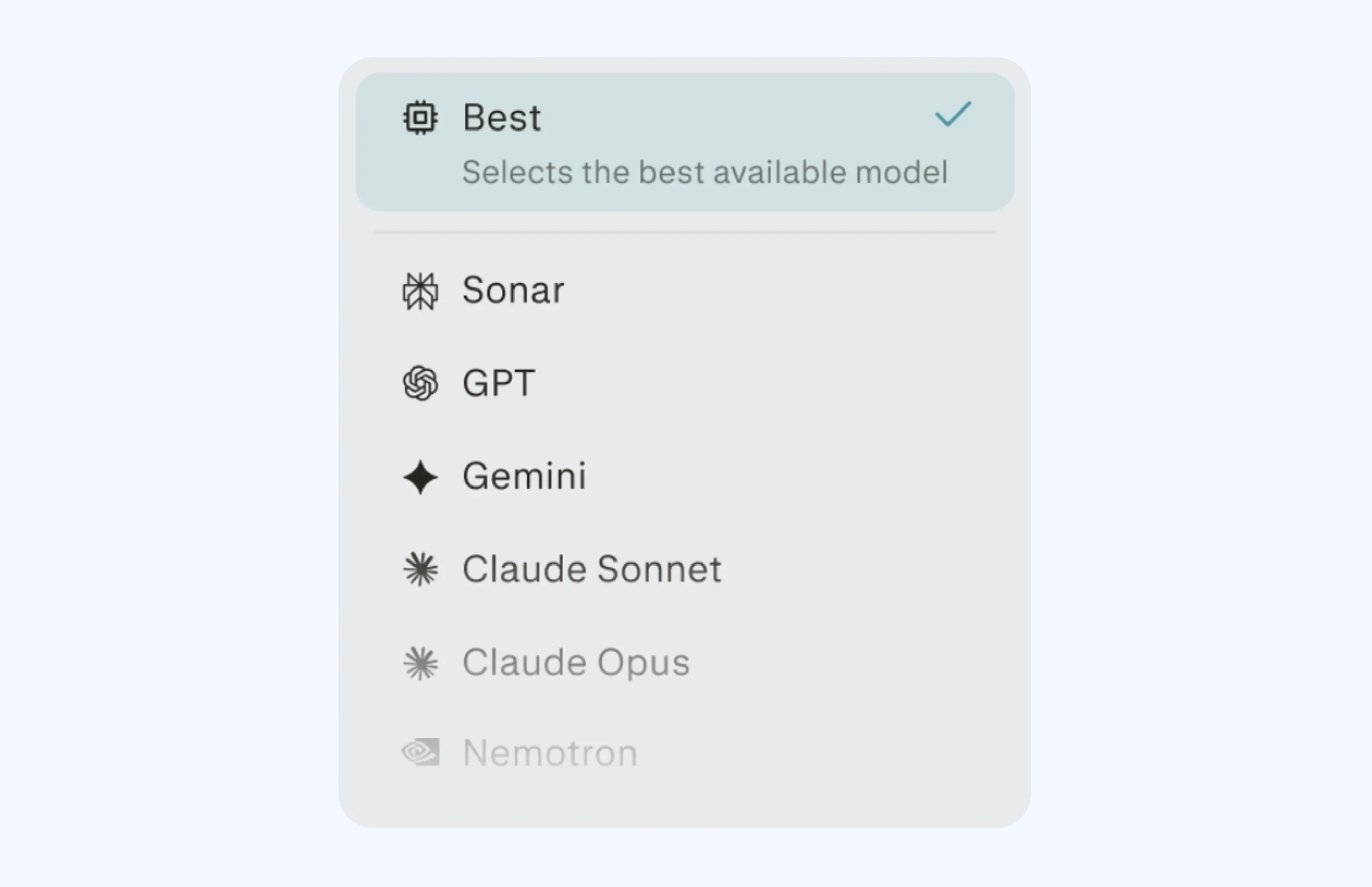
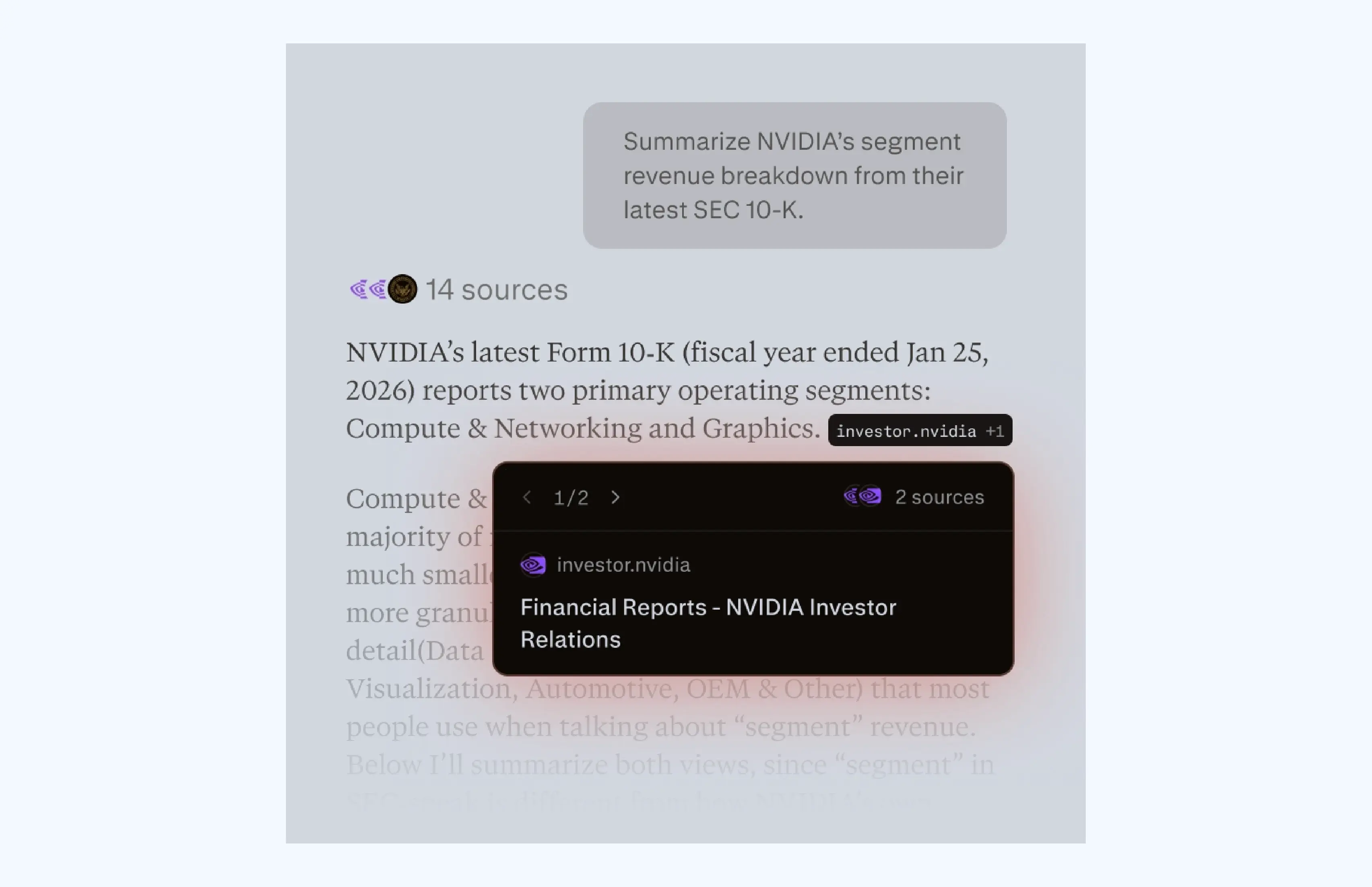
It is an answer engine that searches the web in real time every time you ask and provides answers backed by sources. Perplexity's output looks cleaner than ChatGPT's. It includes a number of large language models, including those from ChatGPT, Gemini, and Claude, along with its own custom model - Sonar.
Source: Perplexity
Primarily a conversational answer engine with a search-first design, it is an excellent answer engine and research tool. Apart from using it as a search engine, you can use it to generate visuals and interactive web apps.
This is purely subjective, but I find Perplexity’s answers cleaner than ChatGPT’s more nested responses, making them easier to scan and digest.
The practical difference is usually their default: ChatGPT is designed for broad task assistance, while Perplexity is designed around web-grounded answers and citations.
Source: Perplexity
One thing worth noting is that Perplexity is slower than ChatGPT because it looks for information in real time while answering. ChatGPT doesn’t trigger a web search every time unless you turn it on yourself. For queries that need current information, ChatGPT may automatically run a web search.
It is a close competitor to established search engines such as Google and Bing. But it is not their replacement. It is designed to sit between chatbots and answer engines, for users who want a search engine and chatbot-like experience in one place.
The following observations evaluate our subjective experience. They should not be viewed as definitive rankings or interpreted as universal conclusions.
Accuracy and Reliability
This matters a lot to me. I use it every day to research new topics and find information. A model would never say, "I don't know." When it doesn't know the answer, it still confidently provides made-up answers – one of the biggest weaknesses of AI models.
An article published on Nature highlights that AI-generated citations are making their way into scientific papers, with around 110,000 publications from 2025 may contain at least one invalid reference.
For me, when I am researching, I tend to use Perplexity because it comes up with citations for every answer– by default. This feature makes it easier for me to double-check the facts.
If we look over industry reports, Perplexity appears to be providing fewer incorrect responses than ChatGPT Search, as highlighted in this study by Columbia’s Tow Center, which analyses 1,600 queries on eight search tools, including ChatGPT, Perplexity, Gemini, and other popular tools, in a specific news citation-retrieval test.
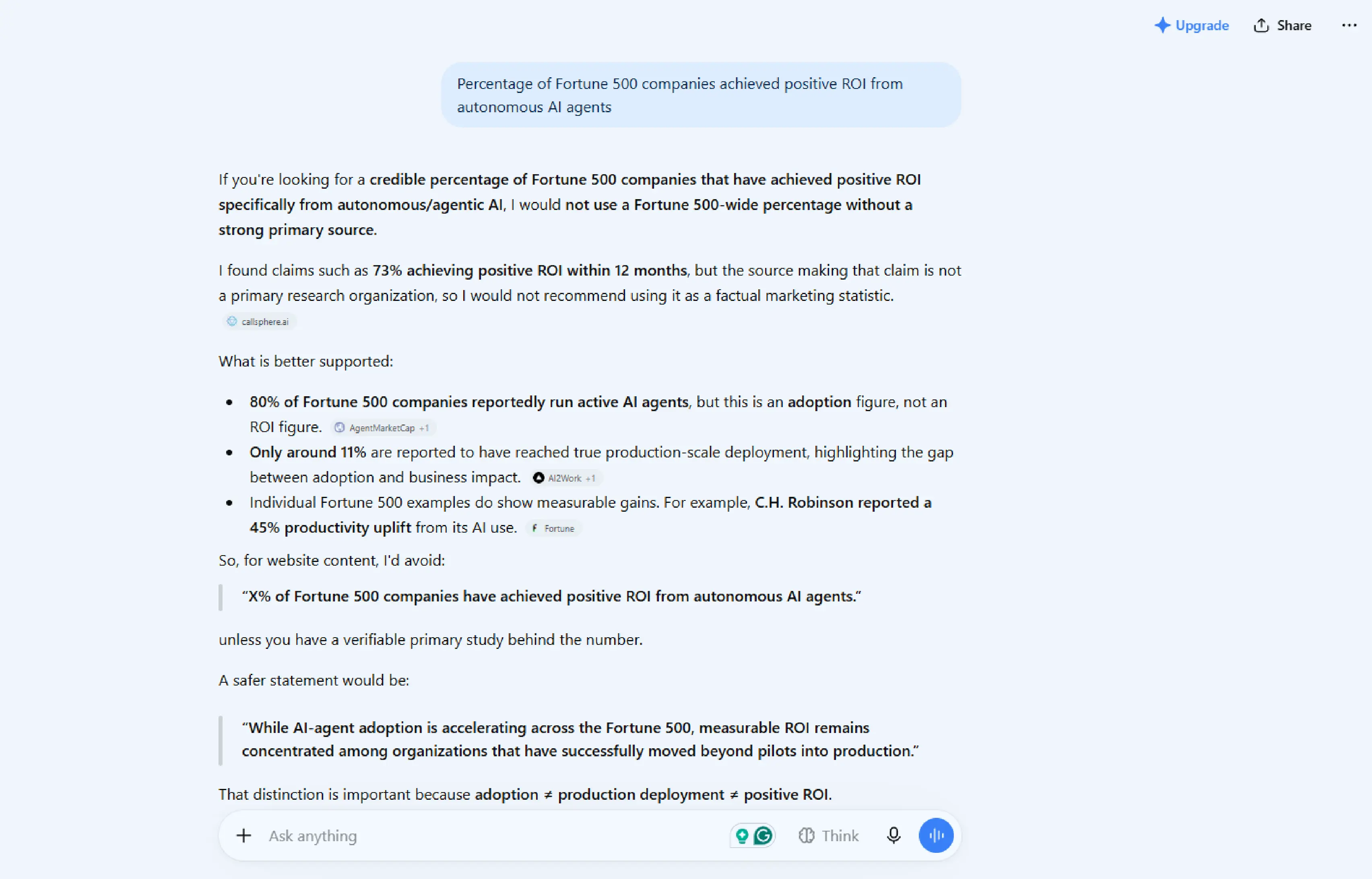
However, these studies are not universal verdicts. From my experience, when I cross-checked claims that seemed questionable, ChatGPT was usually more accurate and pointed me to more credible sources.
ChatGPT output:
Perplexity output:
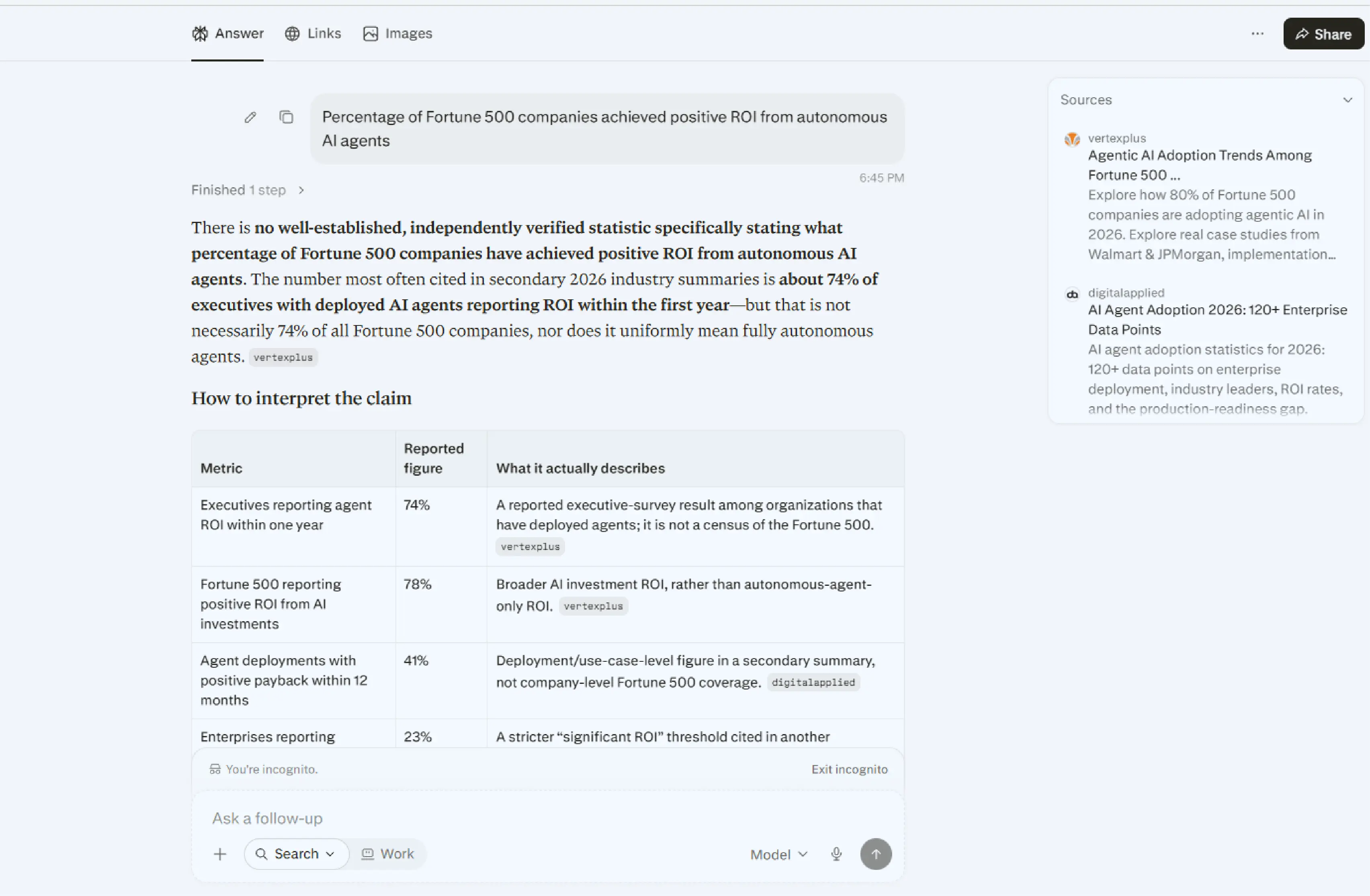
When I ran the query “Percentage of Fortune 500 companies achieved positive ROI from autonomous AI agents.”
ChatGPT appears to be more effective at selecting authentic and authoritative sources for research-based queries. It picks established publications when sourcing relevant information. In contrast, I observed that Perplexity selects information from websites that do not have direct authority in the specific reports being discussed. From my analysis, this difference in source selection makes ChatGPT’s responses appear more reliable and better aligned with the original or authoritative sources.
That said, with every new update in LLMs, the companies building them claim improvements in factual accuracy and reductions in hallucinations. For example, OpenAI reports that GPT‑5 reduced factual-error rates in its own tests compared with GPT‑4o.
Note: This is only a subjective observation based on the cases I evaluated and should not be considered a universal conclusion.
The winner: ChatGPT
LLMs
A chatbot is only as good as the model powering it. Plus, many users don't use a single AI tool. One may prefer ChatGPT’s Codex over Perplexity. For creative work, ChatGPT is a preferred choice for me. From my personal experience, I've found that GPT tends to outperform in certain areas like creative work and writing.
ChatGPT uses its own LLM family, which is developed by OpenAI. On the other hand, Perplexity, along with its in-house model – Sonar, includes many LLMs in one place. It enables you to switch between models for different kinds of tasks such as reasoning, image generation, and document analysis. Both platforms have free versions, but their most capable models, higher usage limits, and some advanced features are available only on paid plans.
The winner: Perplexity
Research
When it comes to market research tasks—such as identifying trends, gathering company and funding data, and assessing market size—surface-level answers aren’t enough.
Perplexity's premium sources provide you with access to peer-reviewed journals and premium paywalled reports from providers such as PitchBook, CB Insights, and Statista.
It is a dedicated space for researchers, journalists, analysts, and students for research. Premium Sources are definitely an advantage if you frequently do this kind of research.
The winner: Perplexity
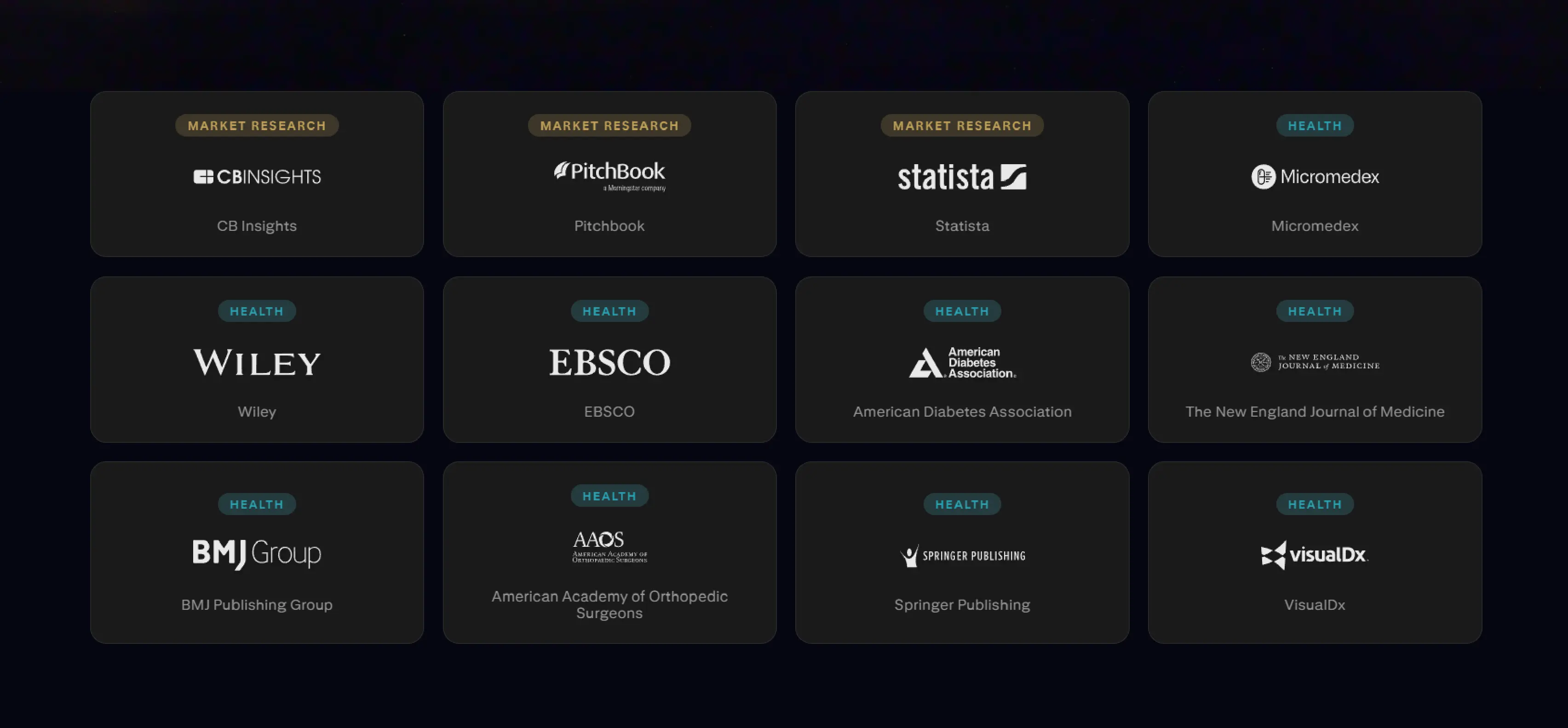
Source: Perplexity
Follow-up
One of the coolest—though not unique—features I found is that they suggest useful follow-up questions. You can continue learning without having to think of the next question yourself.
Both ChatGPT and Perplexity can suggest follow-up questions, although I haven't seen follow-up threads in every conversation. The follow-up threads seem to appear more often during research or exploratory conversations and less frequently after simple questions with clear answers.
Perplexity Projects (Formerly Spaces) vs ChatGPT Projects
Projects are what I would like to call “dedicated folders” where you can upload references and write instructions. It lets you organize related conversations into a folder – with context, references, and instructions- so you're not having to repeat yourself over and over again.
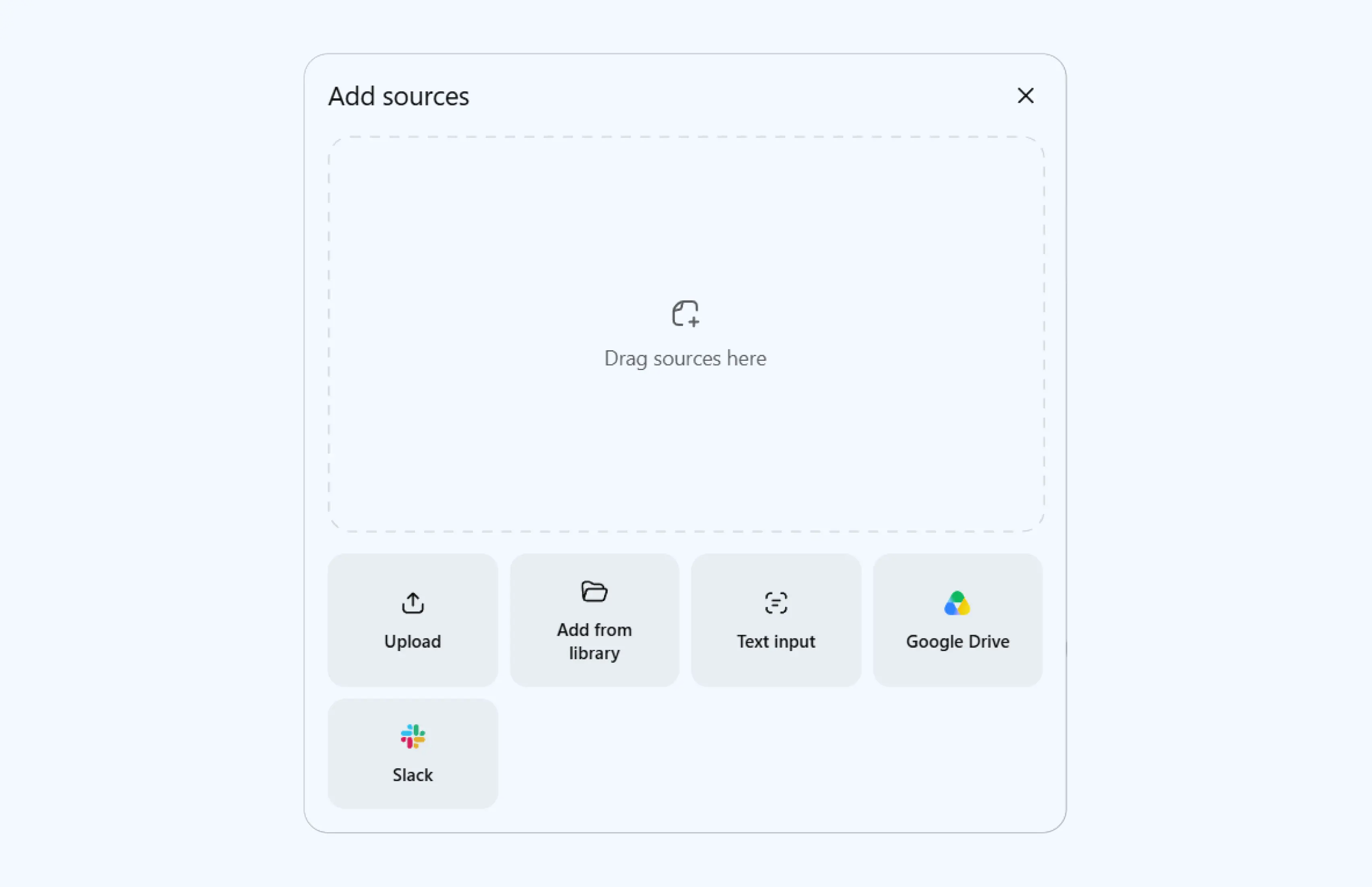
You can find “Projects” features in both ChatGPT and Perplexity. Below, here’s what instructions I've given my writing team to follow when writing B2B blog drafts.
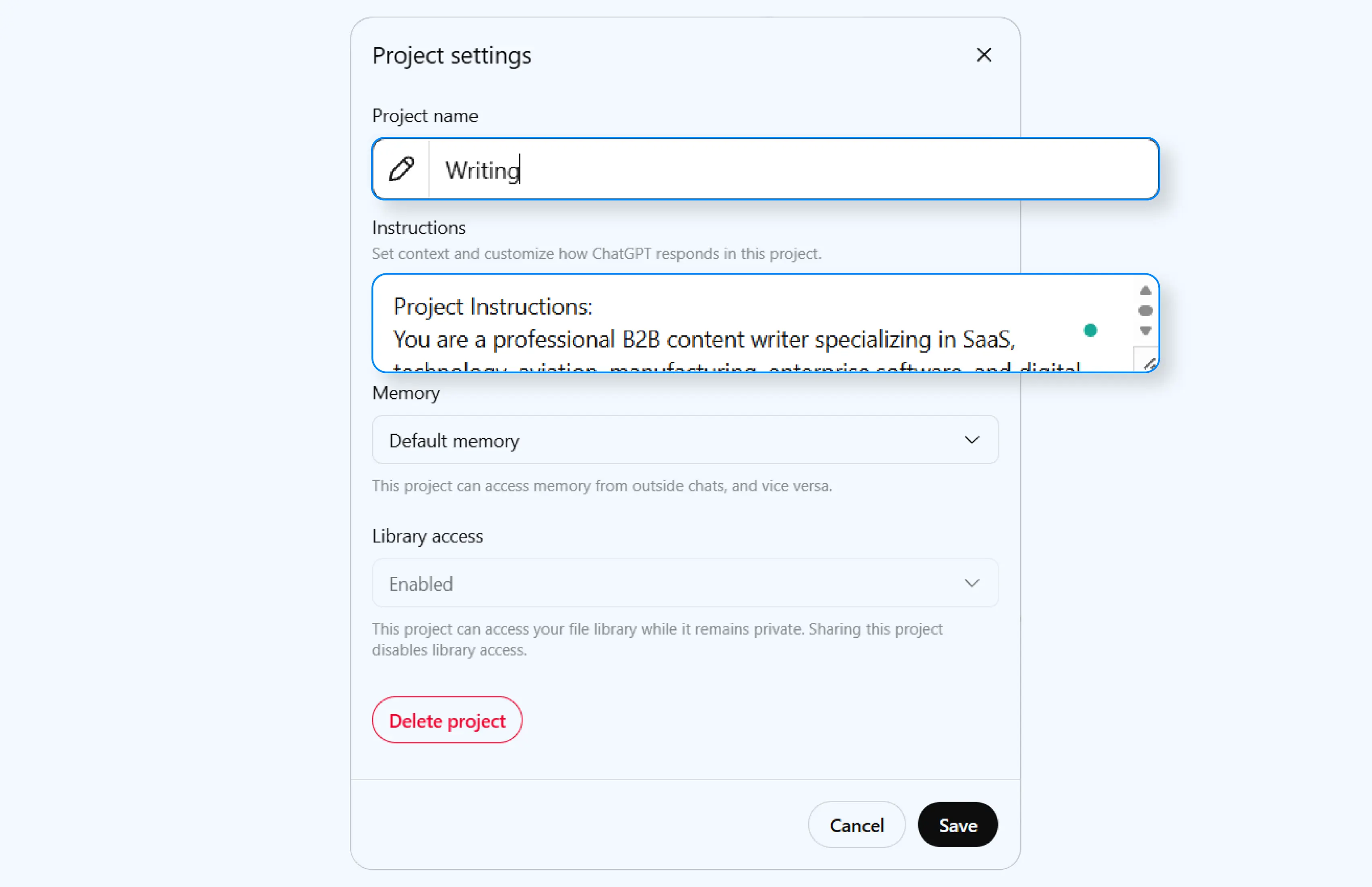
It saves me a decent amount of time every day by not having to provide the same instructions (or prompts) every time I initiate a new chat.
Agentic AI
Comet, Perplexity’s browser, was among the early products to bring agentic AI to web browsing. OpenAI launched its AI browser, Atlas, in October 2025. However, it was deprecated. The reason was that the company decided to bring Browse/Agent into ChatGPT.
Initially, ChatGPT launched Atlas, which is now deprecated, as the company moved more browser experience directly into the chatbot. The line between an AI chatbot and an AI browser is becoming increasingly blurred. The benefit, from my perspective, is that I can use ChatGPT more like an agent that works for me. Instead of downloading or switching to a separate tool, I can simply tell ChatGPT what I want it to do, and it can carry out the task.
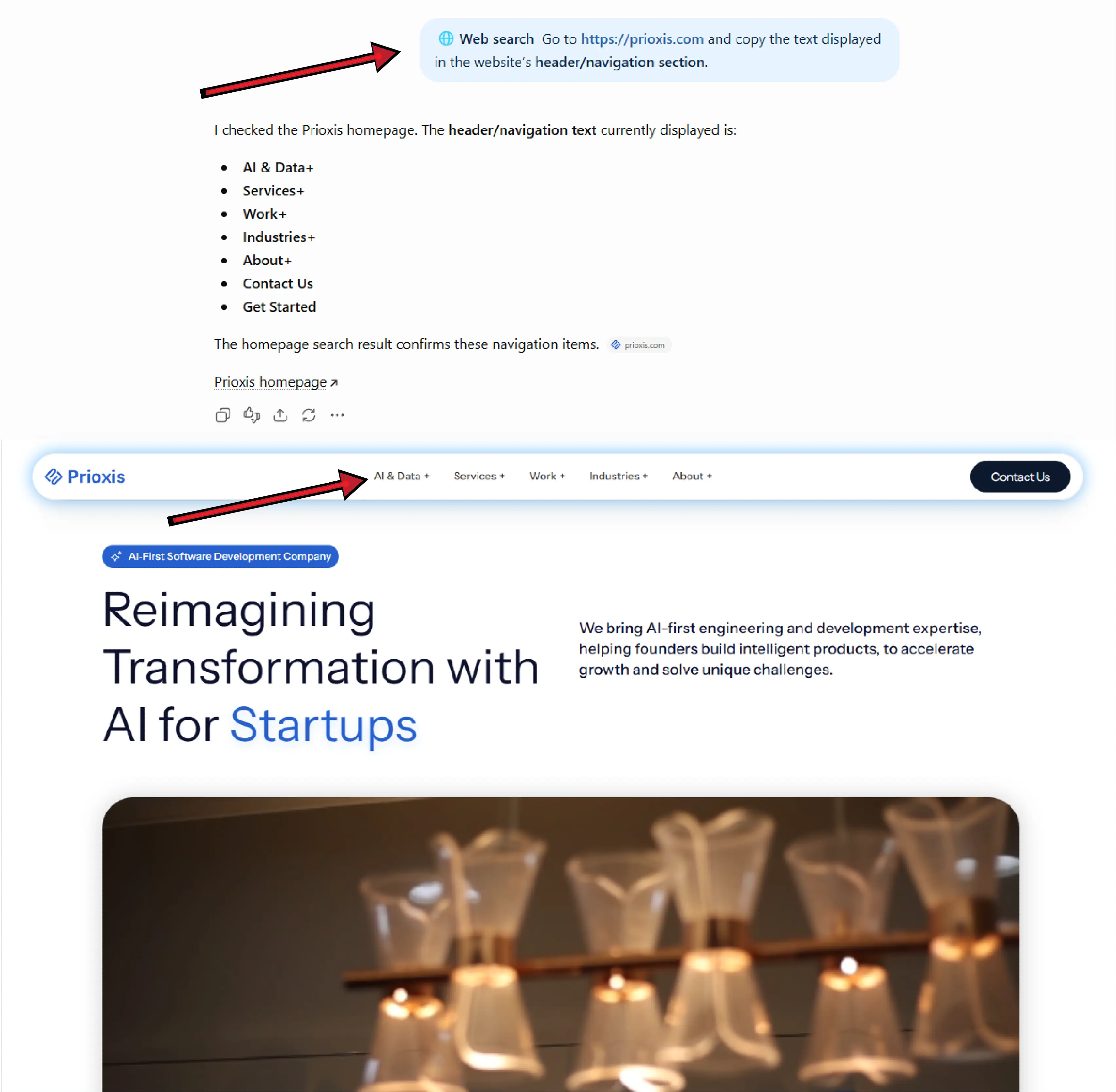
For example, in the query below, I asked ChatGPT to go to Proxis and copy the header text from the website. It was able to do this directly.
- I give it a goal: go to Proxis and get the header text.
- It navigates to the website.
- It identifies the relevant information.
- It extracts the header text.
- It returns the result to you.
If you are from a non-tech field, Perplexity's browser control can automate several tasks. Perplexity wins at browser automation. ChatGPT wins at task execution. But if you need an AI to help develop software, debug code, research a problem, or manage a complex project, ChatGPT's agent capabilities are generally more useful. I've spent some time testing Comet's agentic features with simple tasks. Agents can unquestionably complete tasks. But it is sometimes much slower. A task that a human would execute much faster.
It struggles with navigating JavaScript-heavy websites. One moment it can successfully execute a multi-step workflow. The next, it may struggle to locate a simple page element that a human would spot instantly.
As someone in a creative field, I spend hours researching topics and discovering information. Agentic browsers can occasionally speed up parts of that process, but they haven't reached the point where I can fully trust them with critical browsing tasks.
There's also the question of cost. These systems consume large amounts of tokens while performing actions. For many everyday browsing activities, the time and token costs can outweigh the benefits
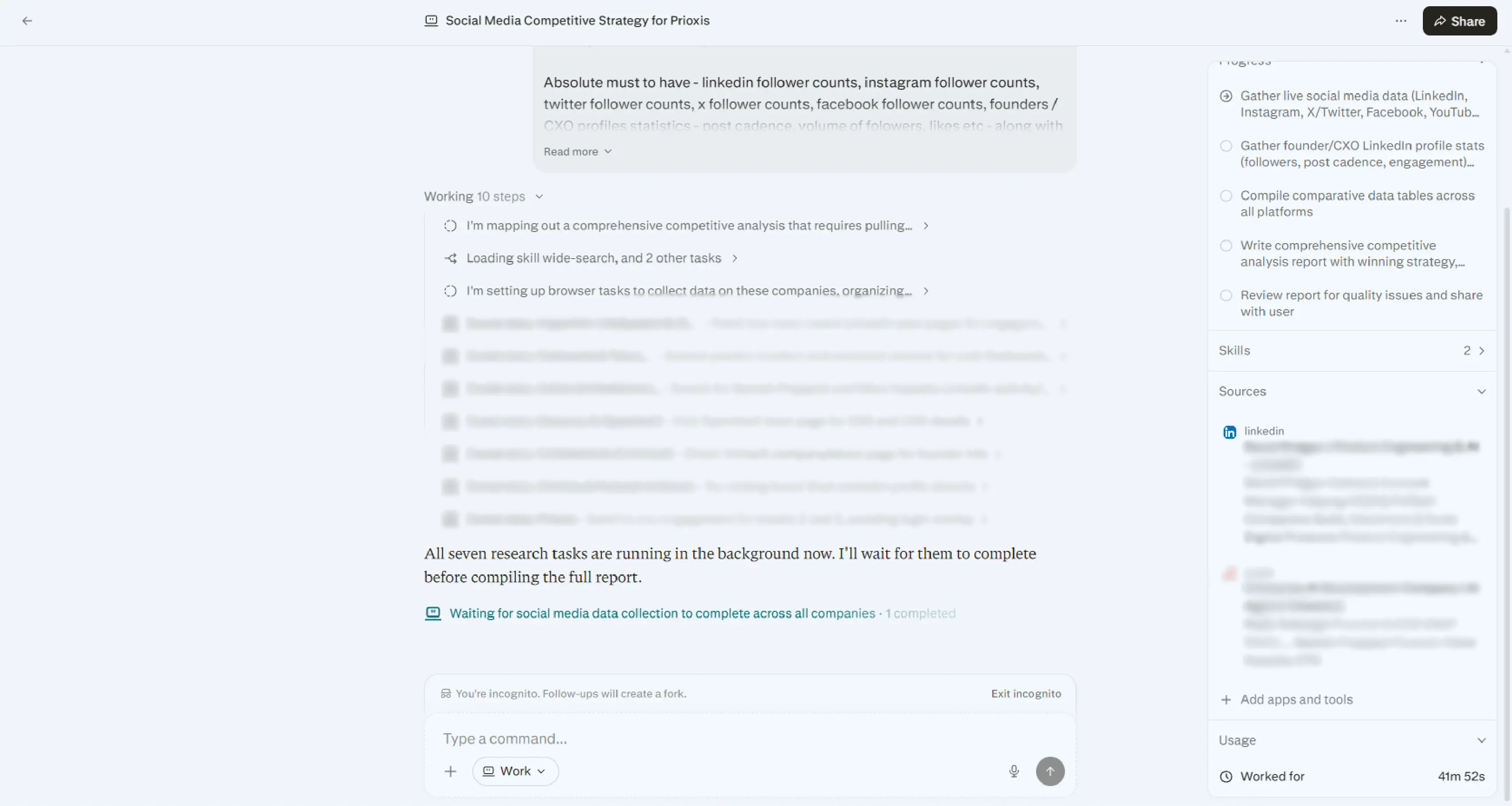
Just look at the task I gave for “social media strategy”—it took Perplexity Computer more than 40 minutes to complete it, and honestly, the output just wasn’t worth the wait.
An example of Comet for Social Media Competitive Analysis:
Pricing
Features such as browser control, agentic workflows, deep research, and advanced automation are not available to free users. Their plans start at around $20 per month, with higher tiers reaching $325 for enterprise customers.
For casual users, ChatGPT's free plan offers more value. Perplexity's free tier is of no use.
One of the advantages of using Perplexity is access to a range of models. For users who frequently experiment with AI tools, having several models available in one interface can be convenient. However, access to the most advanced models is again reserved for higher subscription tiers.
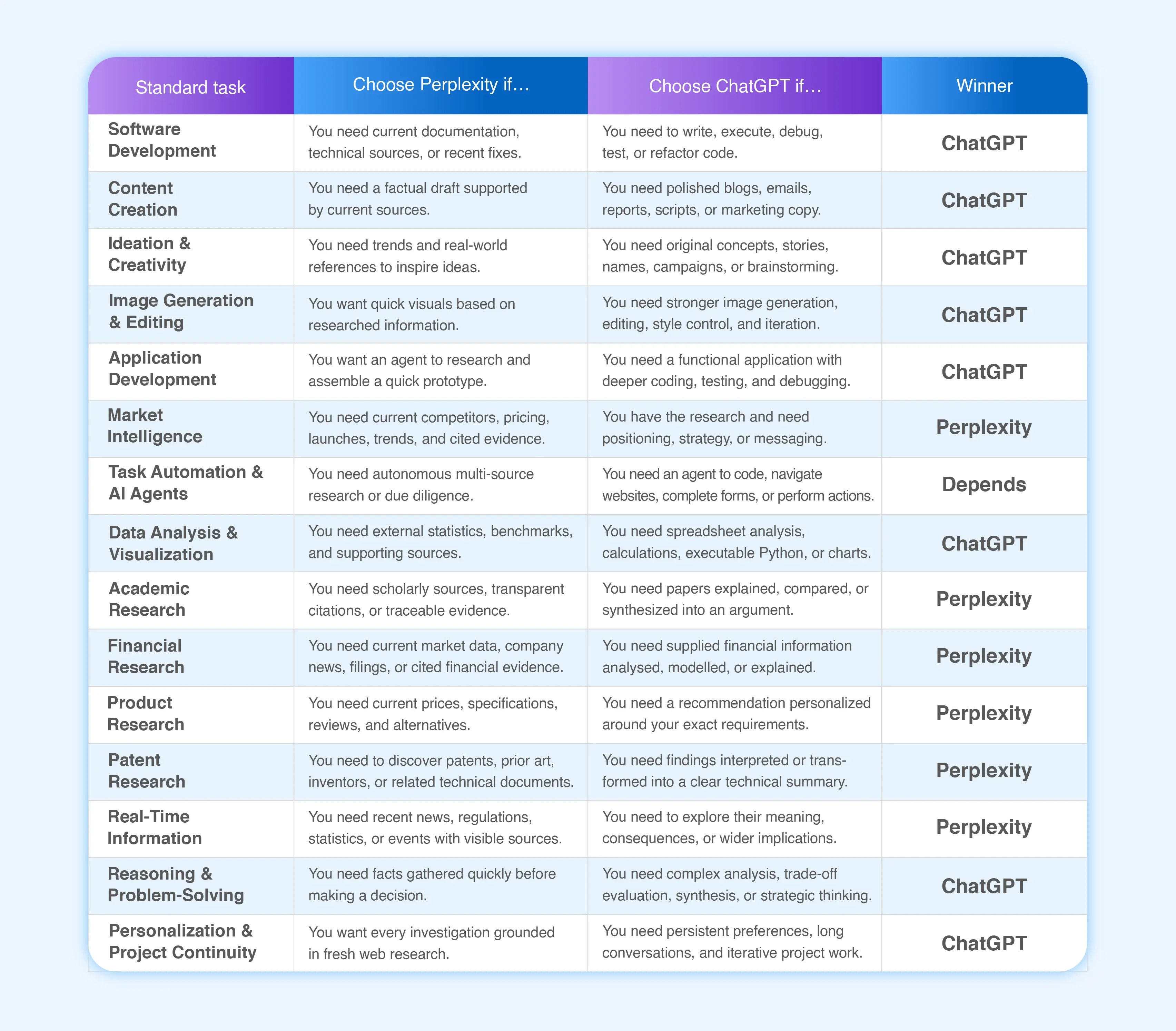
When choosing over each other
Conclusion
No tool is objectively the best. In many ways, every new product tries to fill a gap left by existing tools or those that came before it. There’s no one AI tool that does it all; instead, knowing which tool is right for the task at hand.
If I had to give a subjective answer, I wouldn’t choose one over the other. Perplexity and ChatGPT aren’t direct competitors in the same way that ChatGPT competes with Claude or Gemini. I use them in my daily work. Both LLMs are built for different use cases.
They have become an important part of our lives, helping us in creative work, problem-solving, product development, and research. In a recent study by OpenAI, based on an analysis of millions of conversations, it was found that around 70% of consumers use ChatGPT for non-work (non-formal) activities, and writing was one of the most common uses.