


Summarise with AI:



ERP Implementation is a transformative process that combines fundamental corporate functions into a single system, streamlining operations and increasing productivity. However, it is a complex operation that demands meticulous preparation, execution, and adherence to best practices.
This blog overviews the ERP implementation process and ERP implementation steps, including phases and tried-and-true tactics for success. Whether planning your first ERP deployment or upgrading an existing system, knowing these fundamentals will provide the groundwork for a smooth transition.
What Is an ERP Implementation?
An ERP implementation refers to the incorporation of ERP software implementation into the day-to-day functioning of an organization, from its finance to human resources and from sales to manufacturing and everything else. An implementation process, hence, contains critical stages: planning, the configuration of the system, customization, migration of data, testing, and finally the actual deployment for normal use.
An ERP system implementation is therefore one that seeks to streamline and automate various business processes by bringing them together within one platform and reaps efficiency and productivity improvement with better decision-making capabilities. Its implementation is an extremely complicated exercise that needs good planning, lots of investment, and proper strategy.
Proper planning, stakeholder involvement, and paying attention to organizational change management can help overcome some of the major challenges like ERP integration complexities and ensuring user adoption. Though ERP solutions have become accessible in recent times, success demands a dedicated focus on ERP process optimization and thorough preparation.
Phases of an ERP Implementation Plan
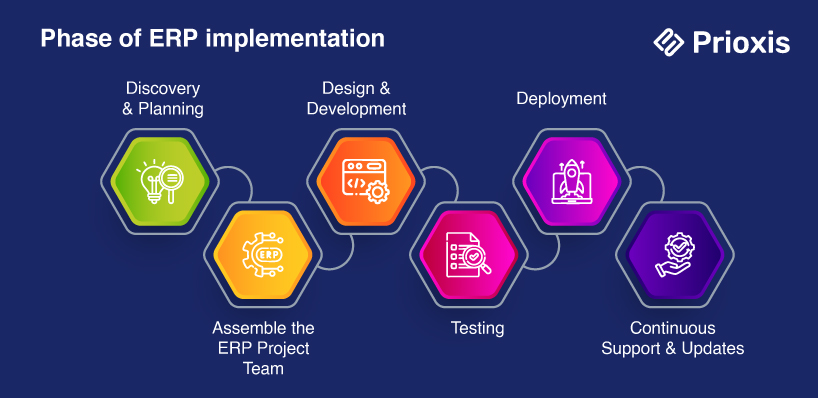
An ERP system implementation has a multi-stage implementation process ensuring that the installed software aligns with the user's business needs and delivers value as expected. Here are some of the significant phases involved.
1. Discovery & Planning
The first phase consists of the business needs identification and proper selection of an ERP system. This includes knowledge of the present workflows, and goals for the project, and document detailed requirements. Organizations need to decide between opting for a cloud-based ERP and an on-premises one. This will set the project's foundation and ensure a well-defined project roadmap, timeline, and resource distribution.
2. Assemble the ERP Project Team
A dedicated ERP project team is important for successful implementation. This team usually consists of an executive sponsor, a project manager, and representatives from all departments that will use the system. Their responsibilities range from managing daily tasks to making key product and design decisions. External consultants or enterprise resource planning implementation partners can also provide valuable expertise during this stage.
3. Design and Development
At ERP software development stage, the new ERP system is configured and customized to facilitate newly designed, lean business processes, if required. The team designs efficient workflows and integrates with other existing systems together with users. Also, at this stage, training material development is undertaken and plans for data migration to the new ERP are devised, thus facilitating the eventual transfer of operations from the old systems.
4. Testing
Rigorous testing ensures that the ERP system functions correctly and meets business requirements. This phase includes module-specific tests, full-system tests, and user acceptance testing. Employees can simulate daily tasks to identify potential issues, while data migration tests ensure the accuracy and consistency of transferred information.
5. Deployment
The deployment marks the official launch of the system. Depending on the approach adopted by the organization, all modules may be implemented simultaneously, or only the most critical areas are rolled out first. The project team and ERP development partner provide support during this critical period to troubleshoot issues and guide users. Some organizations may run legacy systems in parallel for a short time to minimize risks.
6. Continuous Support & Updates
Support takes place post-deployment because an ERP system should continue to keep pace with changing business needs. It involves attending to some user feedback, additional training, and adding updates or new features. Organizations in place handle software updates and hardware upgrades for on-premises ERP systems, while cloud-based ERP system vendors offer automatic updates.
Structured phases are key for most organizations to conduct through the jungle of complexities tied to the ERP system for maximum return on investment.
ERP Implementation Best Practices
An ERP system might be a full transformation process that changes your way of doing business, but very much planning in teamwork and careful best practices may ensure its full success. Among the essential ERP transformation best practices for successfully implementing an ERP system are the following:
1. Assign a Core Project Team
Your project team is the backbone of your implementation effort. An able and well-supported team ensures that the system serves the business, that it will meet its planned schedules, and that it will be within budget. Without the right team, projects are in danger of delays, additional ERP implementation costs, and misconfigurations.
A good ERP implementation team includes:
- A Project Sponsor: Your project sponsor is a high-level leader who supports and advises on project decisions.
- A Project Manager: Responsible for day-to-day management and meeting deadlines.
- Key Business Unit Representatives: Employees from finance, HR, inventory, and customer service departments.
The team is responsible for:
- Defining goals, requirements, and KPIs.
- Controlling the daily tasks of the project and aligning them with business objectives.
2. Define Clear Requirements
Accurate and well-documented requirements are crucial for the successful implementation of an ERP. The requirements should directly link to the company's goals, such as process optimization, cost reduction, or better customer responsiveness.
Key activities in this phase:
- An existing system, workflow, and critical business process analysis.
- Inefficiencies and opportunities for optimization in areas such as accounting, CRM, inventory, and HR.
- Understanding the workflows of your organization is very important so that the ERP solution fits the business needs and objectives.
3. Define Key Performance Indicators
KPIs will give a measurable framework to assess the success of the ERP implementation. The project team should focus on metrics relevant to the business.
Example KPIs by industry:
- Manufacturers: Cycle time, inventory turns, downtime reduction, demand forecast accuracy.
- Retailers: Customer conversion rates, average purchase value, sales per square foot, profit margins.
Defined KPIs keep the project on track and ensure the ERP implementation delivers measurable benefits.
4. Ensure a Solid Project Management Framework
A solid project management framework avoids scope creep, which is a typical problem during enterprise resource planning implementation. A project that is only a few weeks or goes up to one year requires guidelines, timelines, and accountability to stay focused.
Effective project management will ensure that all the milestones are met, the resources are properly allocated, and any unforeseen challenges are met head-on.
5. Collaboration and Communication
Good collaboration and proper communication across all stakeholders are prerequisites for ERP success. The CEO and other top-level executives need to be ERP champions, spelling out the advantages of the system to the organization.
Communication strategies:
- Memoing, blogging, presentations, and regular meetings should all be used in communicating with the teams.
- Employees and the business will reap the long-term benefits.
- Involving all levels of stakeholders helps in wide-ranging adoption and acceptance.
6. Plan and Execute Data Migration
It is one of the most critical elements in the process of an ERP implementation, where poor data quality or errors during migration can compromise the system. Early planning and preparation are key to minimizing risks.
Data migration best practices:
- Assess and clean existing data to eliminate any duplications or inaccuracies
- Coordinate with your ERP vendor to understand data requirements
- Test migration processes multiple times to ensure accuracy and consistency.
7. Train Your Users
Employees need to be comfortable with the new ERP system for it to be successful. Proper training will empower users and reduce resistance to change.
Training strategies:
- Identify a dedicated training room and schedule sessions for employees.
- Train SMEs as internal trainers and support their teams.
- Provide continuous training and support after deployment to fill any knowledge gaps.
Following the best practices will guide a business to streamline its ERP development process, maximize the system's benefits, and minimize service disruptions during the transition.
Conclusion
Implementing ERP system is a big thing that can make your organization work differently, hence increasing efficiency and growth in the business. Success depends on good planning, leadership, and best practices.
By assigning a dedicated project team, defining clear requirements, establishing KPIs, fostering collaboration, and prioritizing data quality and user training, you can ensure a smooth implementation ERP process. Moreover, a robust project management framework helps you stay on track, avoid scope creep, and achieve your business objectives.
Remember that an ERP system is much more than a software solution; it is a strategic investment in your company's future. All these best practices should be implemented by your organization to be able to unlock the full potential of ERP toward sustained success.