


Summarise with AI:



There’s a point in the business lifecycle where you face challenges of managing a complex business. Juggling financials, inventory, supply chain, and customer relationships can feel like spinning plates while walking on a minefield. That is, until you discover the game-changing power of custom-build ERP solutions.
An Enterprise Resource Planning (ERP) system is software that helps a company manage all its business operations. However, understanding ERP can be complex. Many people frequently search for terms like "What is ERP?", "What does ERP stand for?", and "What do ERP systems do?". We'll address these questions here.
Over the past few years, Google Trends shows a 200% increase in ERP-related searches, with the figure doubling in the last two years. This rise is due to businesses facing uncertainty and needing technology like ERP systems to become more agile and adapt to new working environments.
ERP is an intelligent automation solution that can streamline your core business processes. Imagine your team being freed from monotonous tasks like invoicing and payroll, allowing them to focus on higher-value work that drives your company forward.
ERP brings it all together into a centralized hub, giving everyone in your organization access to the same up-to-date information. Gone are the days of hunting down invoices, chasing inventory numbers, or struggling to get a clear picture of your financial health. And the benefits don't stop there.
Sounds too good to be true? Let’s address your questions in a detailed guide that answers what ERP is, and how does it work.
What Is Enterprise Resource Planning (ERP)?
ERP, or Enterprise Resource Planning, is a comprehensive business software solution that enables companies to integrate and manage all their core business processes within a single system. Bespoke ERP software creates harmony among various areas such as finance, manufacturing, distribution, sales, procurement, supply chain, projects, services, and customer care.
ERP systems give powerful analytics and reporting capabilities, providing you with unprecedented visibility into your operations. With real-time data at your fingertips, you can spot trends, optimize workflows, and address issues before they become major problems.
By standardizing and streamlining operations, ERP systems help organizations across various industries enhance efficiency and effectiveness. In essence, bespoke ERP software development facilitates seamless information sharing and coordination across all departments within an organization through a unified platform.
Why Is ERP Important for Businesses?
ERP integration is crucial for businesses, as it improves efficiency, enhances collaboration, and facilitates better decision-making. By integrating data from various departments, ERP systems provide a holistic view of the organization’s performance, helping businesses respond quickly to changing market trends, reduce operational costs, and comply with industry regulations.
Key Components of ERP Systems
ERP systems consist of several modules, each designed to manage specific business functions.
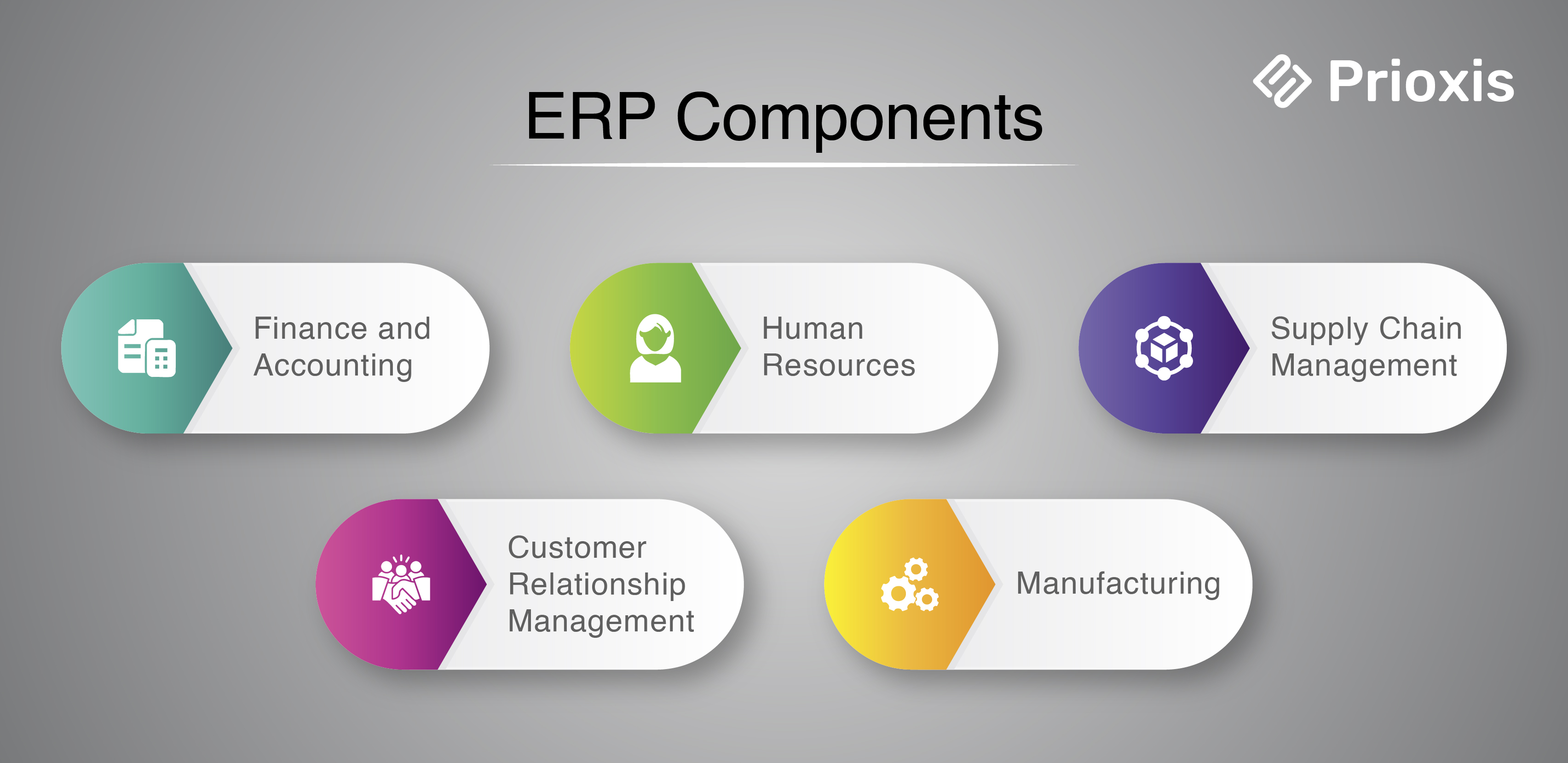
Finance and Accounting
- General Ledger tracks all financial transactions.
- Accounts Payable/Receivable manages outgoing and incoming payments.
- Budgeting and Forecasting assists in planning and financial projections.
Human Resources (HR)
- Employee Records centralizes employee data.
- Payroll Automates salary payments and tax calculations.
- Talent Management manages hiring, training, and performance reviews.
Supply Chain Management (SCM)
- Inventory Management tracks stock levels and orders.
- Order Management System automates sales orders and deliveries.
- Procurement Manages purchasing of raw materials.
Customer Relationship Management (CRM)
- Sales Management tracks leads, opportunities, and customer interactions.
- Customer Service manages customer support and service.
- Marketing Automation automates marketing campaigns and tracks their effectiveness.
Manufacturing
- Production Planning schedules and manages production activities.
- Quality Control ensures products meet quality standards.
- Maintenance Management schedules and tracks equipment maintenance.
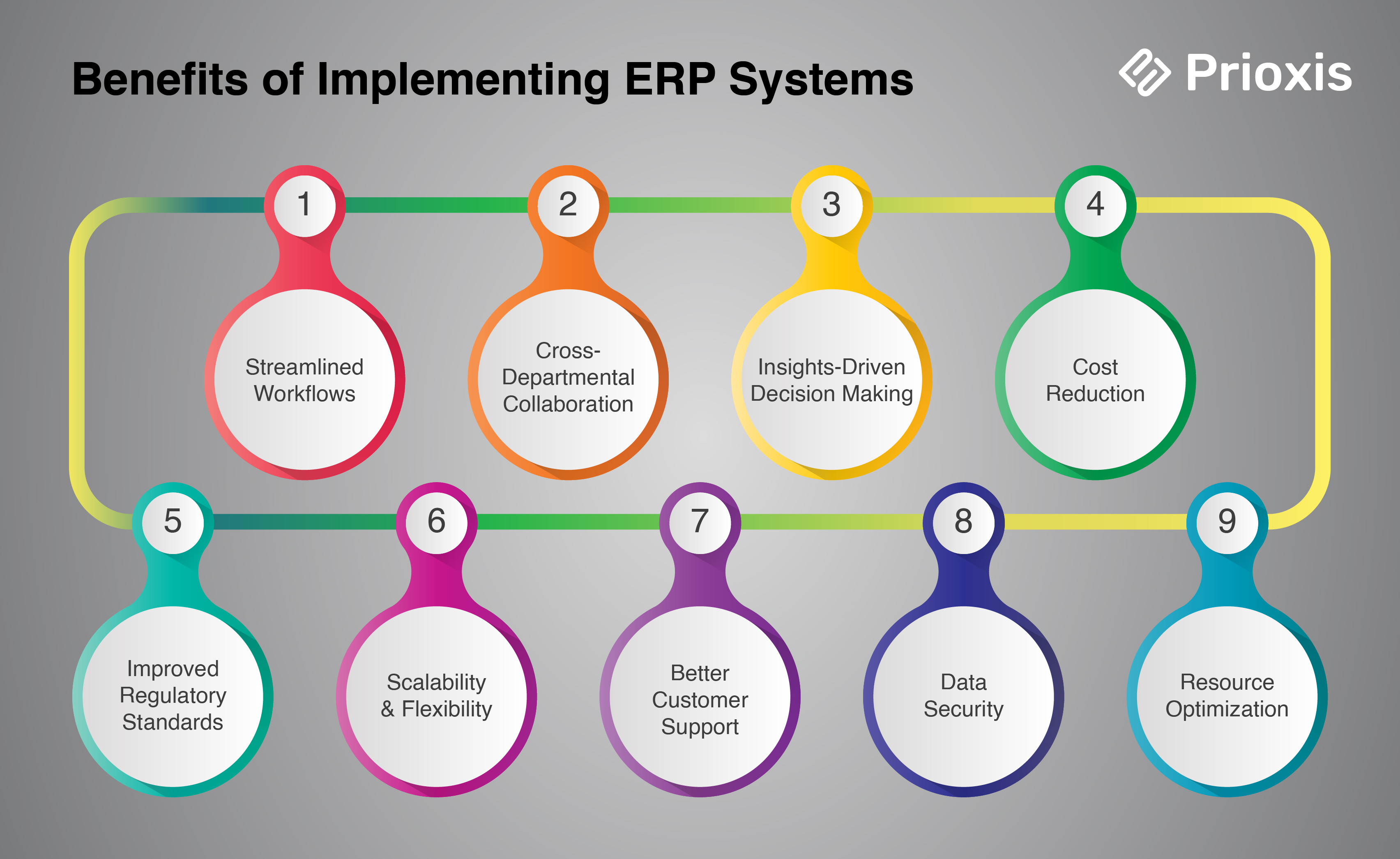
Benefits of Implementing ERP Systems
- Streamlines Your Workflows ERP systems automate routine tasks like order processing and cloud inventory management, reducing the need for manual intervention and minimizing errors. This automation leads to faster and more accurate operations, allowing employees to focus on more strategic tasks.
- Fostering Cross-Departmental Collaboration With a centralized data repository, different departments can collaborate more effectively. For example, the sales team can access real-time inventory levels, ensuring they provide accurate information to customers and reducing the risk of over-promising.
- Insights-Driven Decision Making Real-time reporting and predictive analytics provide insights that help managers make data-driven decisions. Access to up-to-date information enables quick responses to market changes and competitive pressures.
- ERP's Cost-Cutting Capabilities ERP systems can reduce operational costs by streamlining processes and eliminating redundancies. For instance, automating inventory management can reduce carrying costs and minimize stockouts.
- ERP's Regulatory Standards ERP systems help businesses comply with industry regulations by providing accurate and up-to-date records. This is particularly important in industries with strict regulatory requirements, such as healthcare and finance.
- The Scalable Nature of ERP Systems ERP systems are scalable, meaning they can grow with the business. As companies expand, they can add new modules or users to the ERP system without disrupting business operations.
- ERP's Customer Support Improved service delivery through efficient processes leads to higher customer satisfaction. For example, accurate order processing and timely delivery can enhance the customer experience.
- Data Security ERP systems offer robust security features to protect sensitive business data. Centralized data management ensures that data is consistently backed up and protected from unauthorized access.
- Flexibility of ERP Systems ERP systems adapt to changing business needs, allowing companies to modify processes as they grow. This flexibility is crucial in dynamic markets where businesses must respond quickly to new opportunities or challenges.
- Resource Optimization Efficient use of resources, such as labor and materials, is achieved through better planning and control. For example, production planning modules ensure optimal use of raw materials and human resources, reducing waste and lowering costs.
Challenges and Considerations in Implementing ERP Software Systems
- Cost Initially ERP software systems can be expensive to implement, especially for small businesses. The ERP implementation costs include software licenses, hardware, training, and ongoing maintenance. However, the long-term benefits often outweigh the initial investment.
- Complexity Implementing an ERP system can be complex and time-consuming. It requires careful planning, data migration, and employee training. Organizations must be prepared for potential disruptions during the implementation phase.
- Customization While ERP systems are designed to be flexible, excessive customization can lead to increased ERP software development costs and complexity. Businesses should aim to use the standard features of the ERP system as much as possible and customize only when necessary.
- Change Management Successful ERP implementation requires effective change management. Employees need to be trained in the new system, and management must ensure that they understand the benefits and are motivated to use it effectively.
- Data Migration Transferring existing data to the new ERP system can be challenging. Data migration requires careful planning to ensure that all relevant data is accurately transferred without loss or corruption.
ERP Deployment Options
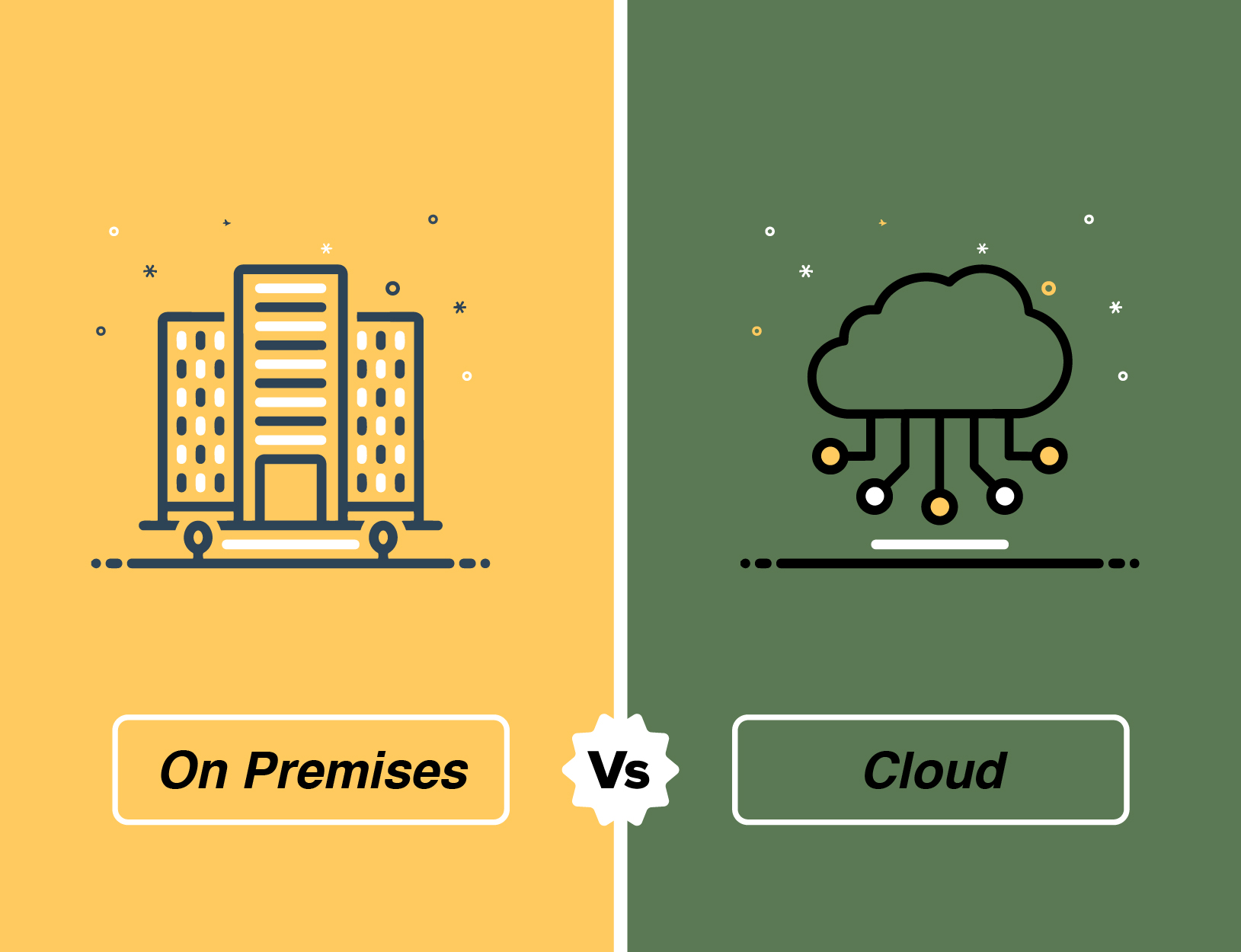
- On-Premises ERP Installed locally on a company’s hardware and servers. This option provides greater control over data and customization but requires significant upfront investment in infrastructure and IT staff.
- Cloud ERP System Hosted on the vendor’s servers and accessed via the internet. Cloud ERP are typically easier to implement and scale, with lower upfront costs. They also offer automatic updates and maintenance, reducing the burden on internal IT staff.
- Hybrid ERP Combines on-premises and cloud-based deployment. Hybrid ERP systems allow businesses to maintain control over sensitive data with on-premises solutions while leveraging the flexibility and scalability of the cloud for other functions.
ERP Case Studies
Manufacturing: Toyota
Toyota uses ERP to streamline manufacturing processes and maintain quality control. By integrating production cycle, inventory management, and quality control, Toyota ensures efficient operations and high-quality products. This integration helps Toyota manage its vast production lines and supply chain effectively, leading to increased efficiency and reduced costs.
Retail: Walmart
Walmart uses ERP to manage inventory and supply chain operations efficiently. The system provides real-time insights into sales trends and inventory levels, helping Walmart optimize its stock and improve customer service. With ERP, Walmart can respond quickly to market demands and maintain a competitive edge in the retail industry.
Healthcare: Mayo Clinic
Mayo Clinic, a globally recognized healthcare provider, uses ERP systems to manage patient records, billing, and supply chain operations. The ERP system ensures that patient information is accurate and accessible, improving the quality of care and administrative efficiency. By integrating these functions, Mayo Clinic can provide better patient outcomes and streamline its operations, maintaining its reputation for excellence in healthcare.
Fintech: PayPal
PayPal, a leader in online payments, uses ERP solutions to manage its financial transactions, customer relationships, and compliance requirements. The ERP system helps PayPal handle vast amounts of transaction data, ensuring accuracy and security. This integration allows PayPal to maintain regulatory compliance and provide reliable services to its users.
E-commerce: Amazon
Amazon employs ERP systems to manage its vast inventory, order processing, and customer service operations. The ERP system provides real-time data on inventory levels, order status, and shipping, enabling Amazon to offer efficient and reliable service to millions of customers worldwide. This integration helps Amazon maintain its position as a leading e-commerce platform by optimizing its supply chain and improving customer satisfaction.
The Future of ERP
The future of ERP is moving towards more cloud-based solutions, increased use of artificial intelligence (AI) and machine learning (ML) for predictive analytics, and enhanced mobility with mobile ERP applications. These generative AI advancements and tools will further streamline operations and improve decision-making processes for businesses.
How to Select the Right ERP System
- Assess Business Needs Understand your company’s specific requirements. Identify the processes that need improvement, and the features required to support those processes.
- Evaluate Options Compare different ERP solutions based on features, costs, and scalability. Look for systems that offer the functionality needed to support your business processes.
- Vendor Reputation Consider the vendor’s experience and customer support. Look for vendors with a proven track record of successful implementations and reliable support services.
- Customization and Flexibility Ensure the system can be tailored to your needs. Look for ERP solutions that offer flexibility in customization to match your specific business requirements.
- Integration Capabilities Check how well the ERP integrates with existing systems. Ensure that the ERP system can seamlessly connect with other software used in your organization.
Gain Control of Your Business
Enterprise Resource Planning (ERP) is not merely a software solution; it has the power to transform businesses across all industry verticals. We explored what ERP is and how it works. These powerful ERP applications helped the world's major corporations streamline operations, boost efficiency, and provide crucial insights for better decision-making.
We have explored the process of ERP development and how it works, seeing how these powerful ERP applications can streamline operations, boost efficiency, and provide crucial insights for better decision-making. From cost savings to improved collaboration, the positive impacts of how ERP systems work ripple throughout an organization.
So, whether you are considering your first ERP implementation or looking to upgrade your existing solution, this investment goes beyond improving your current operations, it positions your business for long-term success in the future.


Related Blogs
What Is Cloud-Native Architecture? Pros, Cons and Key Components
Explore practical insights from engineers who build scalable digital products every day.
Top Reasons To Hire A .NET Developer
Explore practical insights from engineers who build scalable digital products every day.
Top 9 Cloud Benefits: Productivity, Innovation & Growth
Explore practical insights from engineers who build scalable digital products every day.
Benefits of a Dedicated Development Team Model
Explore practical insights from engineers who build scalable digital products every day.
Top 12 Software Development Methodologies
Explore practical insights from engineers who build scalable digital products every day.
Why Cloud Integration Matters: Is Your Business Ready?
Explore practical insights from engineers who build scalable digital products every day.
.NET Core vs .NET Framework: Key Differences That Matter
Explore practical insights from engineers who build scalable digital products every day.
Why Is Azure DevOps the Key to Faster Business Growth Today?
Explore practical insights from engineers who build scalable digital products every day.
Azure DevOps Pipelines: Tools for Smoother Deployments
Explore practical insights from engineers who build scalable digital products every day.
On Premise vs Cloud Computing: Cost, Security & Scalability
Explore practical insights from engineers who build scalable digital products every day.